The Trending Hobbies for Seniors in 2026 are not necessarily about sitting quietly and passing the time. In fact, some of the most popular hobbies today are helping older adults stay active, learn new skills, meet people, exercise their creativity, and simply have more fun.
And that last part matters.
Retirement gives you something you probably haven’t had enough of for many years: time. The question is what you want to do with it.
Maybe you want to get outside more. Perhaps you’ve always wanted to paint but never had the time. Maybe technology still feels a little intimidating, and you’d like to become more comfortable with your smartphone or computer. Or perhaps cooking has suddenly become more interesting now that you don’t have to rush through dinner after a long day at work.
The good news is that you don’t have to choose just one.
Here are five hobbies that deserve a serious look in 2026.
1. Nature Walks and Hiking Clubs
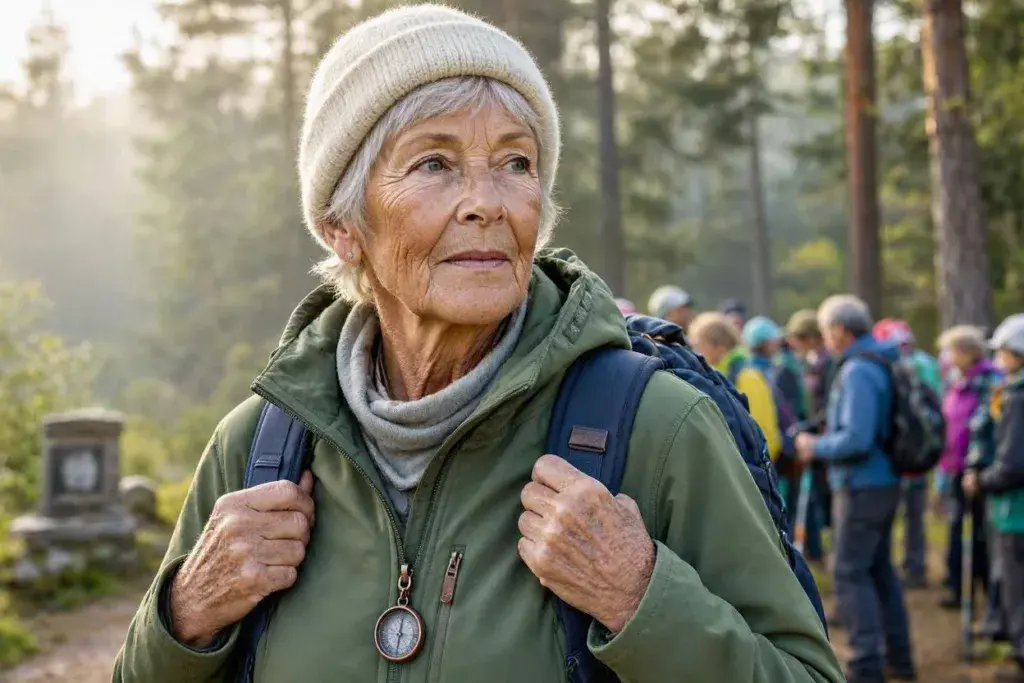
Let’s start with one of the simplest hobbies around: walking, and staying fit during retirement
You don’t need expensive equipment, a mountain nearby, or the fitness level of a professional hiker. A nature walk can be as simple as spending 30 minutes walking around a local park.
And if you’re looking for a little more adventure, hiking clubs can turn an ordinary walk into a social event.
The Centers for Disease Control and Prevention recommends that adults 65 and older get at least 150 minutes of moderate aerobic activity each week, along with muscle-strengthening and balance activities. Brisk walking counts as moderate aerobic activity, while hiking can provide more vigorous exercise.
But there is another benefit that shouldn’t be overlooked: getting out of the house.
Walking with other people gives you a reason to get moving on days when you might otherwise decide to stay home. You can talk, explore new places, photograph interesting scenery, identify birds or simply enjoy a cup of coffee together afterward.
How to get started
Don’t immediately sign up for a 10-mile mountain hike.
Start with a comfortable local trail or walking path. A useful online resource is AllTrails, where you can search for trails by location, difficulty, distance and other characteristics. It also provides maps, photographs and reviews from other walkers and hikers.
You can also search online for:
- “senior walking groups near me”
- “senior hiking clubs near me”
- “walking clubs [your city]”
- “nature walks [your city]”
Local recreation departments, parks departments, senior centers and community organizations are also excellent places to check.
And don’t underestimate Facebook. Many local walking and hiking groups use Facebook to organize weekly outings.
A word about safety: Start slowly, particularly if you have been inactive. Choose a trail appropriate for your ability, check the weather, carry water and let someone know where you’re going. If you are considering vigorous activity after being inactive, the CDC recommends discussing it with your doctor.
Want to learn more?
For an excellent overview of physical activity for older adults, see the CDC’s current guide, “Physical Activity Benefits for Adults 65 or Older.”
For finding trails, visit AllTrails and enter your ZIP code or city.
2. Art, Painting and Other Creative Hobbies
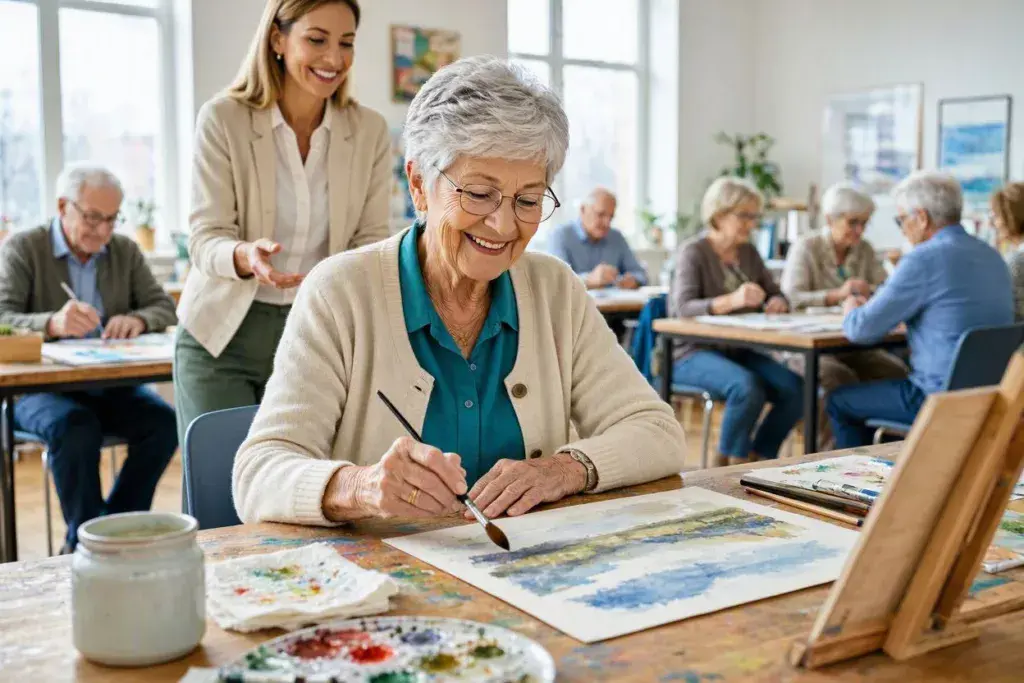
Here’s a question: When was the last time you made something simply because you wanted to?
Not because someone asked you to. Not because it was part of your job. Not because it needed to be done around the house.
Just because you wanted to.
That is one of the reasons artistic hobbies are so appealing in retirement.
Painting, drawing, pottery, woodworking, photography, knitting, quilting and even jewelry-making give you something tangible to work on. And you don’t need to be particularly artistic to enjoy them.
In fact, being a beginner can be part of the fun.
You might start with a simple watercolor class and discover that you love it. Or perhaps photography catches your attention because you already carry a remarkably capable camera around in your smartphone.
There is also growing interest in the relationship between creative activities and healthy aging. AARP recently highlighted research suggesting that creative activities can support cognitive function and emotional well-being in older adults.
Where can you learn?
Start locally.
Check:
- Your local senior center
- Public library
- Community college
- Parks and recreation department
- Local art stores
- Museums
- Community arts organizations
Don’t overlook colleges and universities, either.
Many colleges offer programs for older adults, including art, music, history, technology and other subjects. AARP’s recent guide to college courses for older adults is a good place to begin exploring what may be available.
You can also learn from home through YouTube and online art classes.
Search for something specific, such as:
“beginner watercolor painting for seniors”
or
“beginner photography course online.”
You’ll quickly discover that you don’t have to spend a fortune to get started.
Here’s an idea
Don’t simply take a class and put your finished work in a closet.
Create a project.
Paint a portrait of a grandchild. Photograph the birds visiting your backyard. Make a scrapbook of your family history. Try pottery and make a few Christmas gifts.
A hobby becomes much more satisfying when it produces something you can share.
3. Technology as a Hobby

And if this article inspires you to share your own experiences, start a blog, or build a website about your interests, a resource like Wealthy Affiliate can be worth mentioning because it provides training, tools, and community support for people who want to learn how to create and grow an online presence.
Now technology might seem like an unusual hobby, but hear me out.
Learning how to use technology can actually open the door to dozens of other hobbies.
You can learn photography with your smartphone. Explore genealogy online. Take an online history course. Join a virtual book club. Play strategy games. Learn how to edit photographs. Create videos for your family. Even experiment with artificial intelligence.
And you don’t have to become a computer expert.
Perhaps your goal for 2026 is simply to become comfortable with the technology you already own.
For many retirees, that alone can be liberating.
Start with one thing
Don’t try to learn everything at once.
Pick one project.
For example:
Week 1: Learn how to organize photographs on your phone.
Week 2: Learn how to make a video call.
Week 3: Learn how to use Google Maps.
Week 4: Learn how to safely shop online.
Before you know it, you’ve developed a new hobby without even realizing it.
Where can seniors learn technology?
One of the best resources to investigate is Senior Planet from AARP.
Senior Planet offers online classes, discussion groups and technology programs specifically designed for older adults. Its 2026 program information includes technology classes as well as exercise programs and discussion groups.
You can also find technology tutorials on YouTube by searching for the specific device or task you’re trying to learn.
For example:
- “How to use an iPhone for beginners”
- “How to organize photos on Android”
- “How to use Zoom”
- “How to use Google Maps”
- “How to avoid online scams”
One advantage of learning technology as a hobby is that you can immediately put what you’ve learned to use.
And don’t be embarrassed to ask for help. Senior Planet even provides technology assistance and one-on-one help opportunities for older adults.
4. Yoga, Tai Chi and Qigong
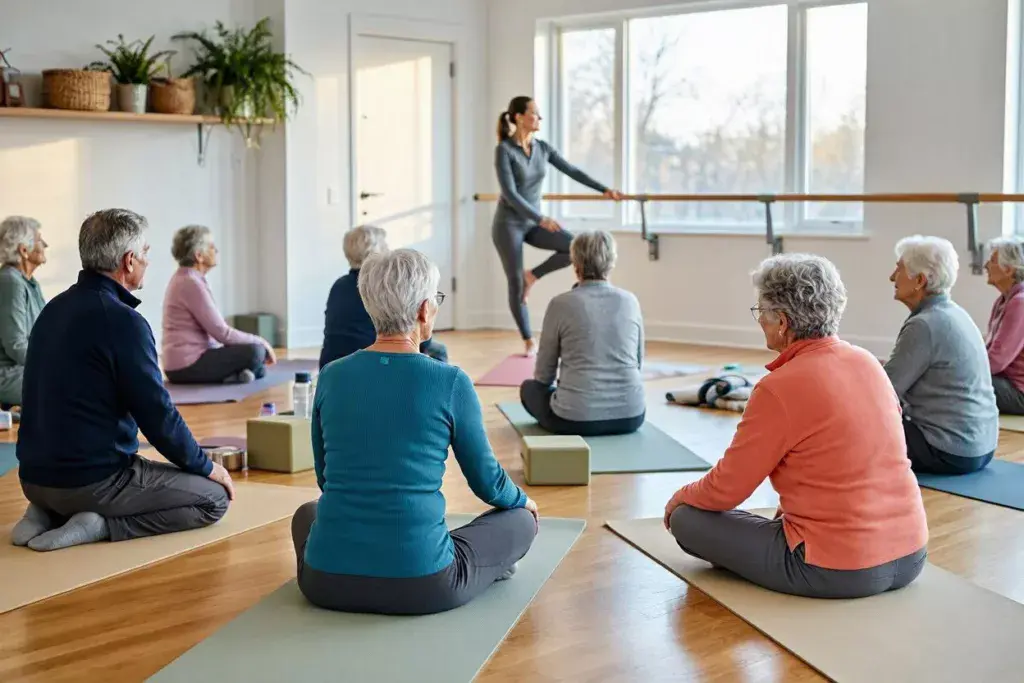
If you like the idea of a hobby that combines movement with relaxation, put yoga, tai chi and qigong on your 2026 list.
These activities are particularly interesting for older adults because they can generally be adapted to different abilities.
Tai chi, for example, involves slow, controlled movements, breathing and concentration. Some forms can even be adapted for people who need to practice while seated.
And there is some encouraging research behind it.
The National Center for Complementary and Integrative Health reports that tai chi may improve balance and stability in older adults and may reduce the risk of falls. Research also suggests that tai chi, qigong and yoga may provide modest cognitive benefits, although more research is needed.
That makes these activities interesting not only as exercise, but as a hobby that can become part of your regular routine.
Where do you begin?
Look for:
- Senior-center classes
- YMCA programs
- Parks and recreation classes
- Local yoga studios
- Community centers
- Tai chi groups
- Online senior fitness programs
When searching online, be specific.
Try:
“senior tai chi classes near me”
or
“chair yoga for seniors online.”
You can also find instructional videos on YouTube, although beginners should choose programs designed specifically for older adults rather than jumping into an advanced class.
Take it slowly
One of the biggest mistakes people make with a new exercise hobby is doing too much too soon.
The goal isn’t to impress anyone.
The goal is to keep doing it.
If a 20-minute beginner class leaves you feeling good, that’s a success. You can always build from there.
And if you have concerns about whether a particular activity is appropriate for you, talk with your healthcare provider before beginning.
5. Cooking and Culinary Adventures
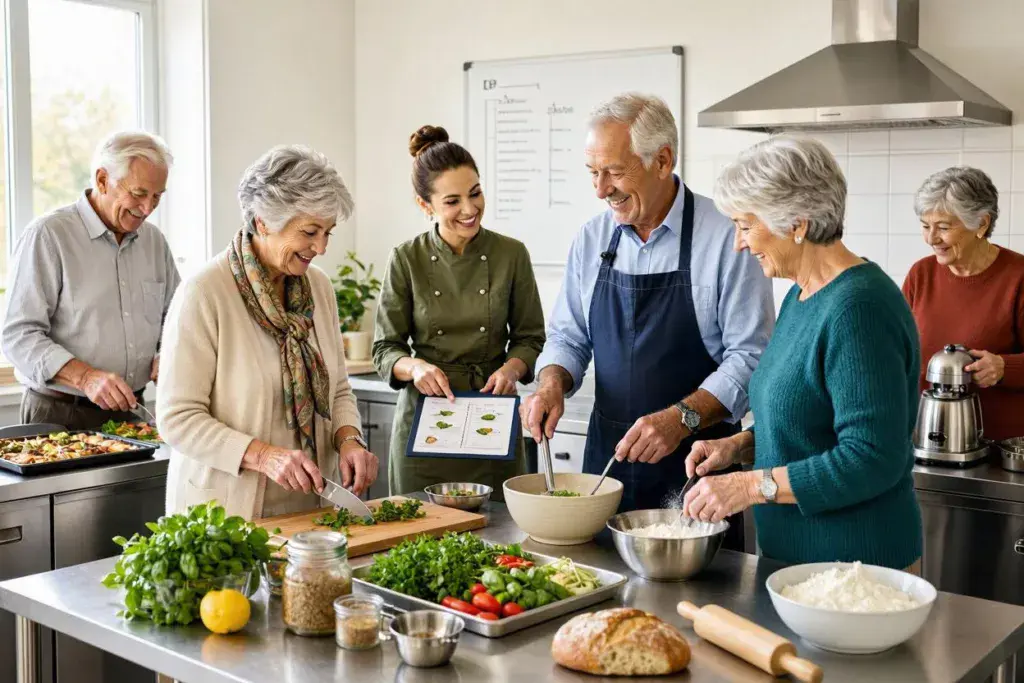
Cooking may not sound like a new hobby to someone who has spent 40 or 50 years preparing meals.
But there’s a big difference between having to cook and choosing to cook.
Retirement can give you the opportunity to slow down and experiment.
Instead of throwing together dinner because everybody is hungry, why not try making something you’ve never cooked before?
Perhaps Thai food.
Maybe homemade pasta.
How about learning to bake bread?
Or exploring healthier versions of some of your old family favorites?
Cooking can also become a social hobby.
Invite a friend over and cook together. Start a small neighborhood cooking group. Have each person prepare a different dish and exchange recipes. Or involve the grandchildren.
It doesn’t have to be complicated.
Turn cooking into a learning experience
Choose one new cuisine each month.
For example:
January: Italian
February: Mexican
March: Mediterranean
April: Indian
May: Thai
You don’t have to become an expert. Simply choose two or three recipes and learn something about the food and culture behind them.
You can also combine cooking with another hobby by growing some of your own herbs or vegetables.
Where can you learn?
Check your local:
- Community college
- Senior center
- Parks and recreation department
- Community center
- Cooking school
- Cooperative Extension program
Online cooking classes are another option.
University Extension programs can be particularly useful because many combine cooking instruction with nutrition and healthy-living information. The University of Minnesota Extension, for example, offers programs covering meal planning, food preparation, nutrition and healthy living for older adults.
And if you enjoy cooking with your grandchildren, look for family-oriented cooking programs that can turn the kitchen into a shared activity rather than simply another chore.
Don’t Forget the Social Side of Your Hobby
There is a common thread running through many of these hobbies.
People.
You can paint alone, hike alone, cook alone or practice tai chi alone. But many hobbies become more enjoyable when you share them with other people.
That may be particularly important after retirement, when the built-in social interaction of the workplace disappears.
A walking group gives you walking partners.
An art class gives you classmates.
A cooking club gives you people to eat with.
An online technology group gives you people to learn with.
And that’s something worth remembering when choosing a new hobby.
Don’t ask only:
“What sounds interesting?”
Also ask:
“Who could I do this with?”
That simple question can turn a hobby into a social network.
How to Choose Your New Hobby in 2026
Still not sure where to start?
Try this simple test.
Pick one hobby from each category:
Something physical: walking, hiking, tai chi or yoga.
Something creative: painting, photography, woodworking or crafts.
Something that challenges your brain: technology, genealogy, puzzles, learning a language or taking an online course.
Something social: a club, class, volunteer group or community organization.
You don’t have to commit to all four.
Try one for a month.
If you don’t enjoy it, move on.
That’s one of the great things about retirement. You aren’t choosing a new career. You’re choosing something that makes your life a little more interesting.
Trending Hobbies for Seniors in 2026: The Best One May Be the One You Actually Enjoy
The best hobby isn’t necessarily the newest or trendiest one.
It’s the one that makes you look forward to tomorrow.
Maybe that’s walking through a local nature preserve with a few friends. Maybe it’s learning to paint. Maybe you’re finally going to figure out what all those buttons on your smartphone actually do.
Perhaps you’ll discover that tai chi helps you slow down. Or you’ll become the person in the family everyone calls when they want your homemade lasagna.
There is no rule saying retirement has to mean slowing down.
In many ways, it can mean trying things you’ve never had time for before.
So don’t wait for the perfect hobby to find you.
Pick something that interests you, find a beginner’s class or group, give it a try and see where it takes you.
You might discover that the next chapter of your life has more possibilities than you ever imagined.