Being old doesn’t mean you have to become immobile. Actually, there are plenty of ways to stay active and moving that are good for you in many ways as you get older. The important thing to keep in mind when selecting what to do for yourself is picking low impact exercise.
Low impact exercise puts very little stress on your joints but does improve your strength and mobility, helps build flexibility and balance, enhances your aerobic capacity and fitness, and improves your mood. It even may help you improve and maintain your sleep and quality of life. In short, it’s something that we should do to ensure that we don’t lose our independence when we get older.
The most common question regarding exercise for seniors, however, is how you do it and where you go to do it. And guess what, you can start doing it right at home and at no cost! So many low impact exercises that seniors should be doing can be done at home! In this post, you’ll find a list of simple and easy low impact exercise ideas that seniors should be adding to their exercise routine and doing regularly.
Why Low Impact Exercise Matters for Seniors
As we age, our muscles naturally become weaker, our joints may become stiffer, and our balance can sometimes decline. Conditions such as arthritis, osteoporosis, and heart disease can also make vigorous exercise difficult.
However, staying inactive often makes these issues worse.
Regular gentle exercise can help:
- Improve balance and reduce the risk of falls
- Strengthen muscles and bones
- Increase flexibility and mobility
- Support heart health
- Improve memory and mental sharpness
- Reduce feelings of anxiety and depression
- Help maintain independence for longer
The key is consistency rather than intensity.
No. 10 – Gentle Neck and Shoulder Stretches
Many seniors carry tension in their neck and shoulders, particularly after years of working at desks or spending long periods sitting.
Simple shoulder rolls and gentle neck stretches can:
- Relieve stiffness
- Improve posture
- Increase range of motion
- Reduce headaches caused by muscle tension
Try spending just five minutes each morning slowly rolling your shoulders and gently turning your head from side to side.
Sometimes a few simple stretches can make you feel years younger.
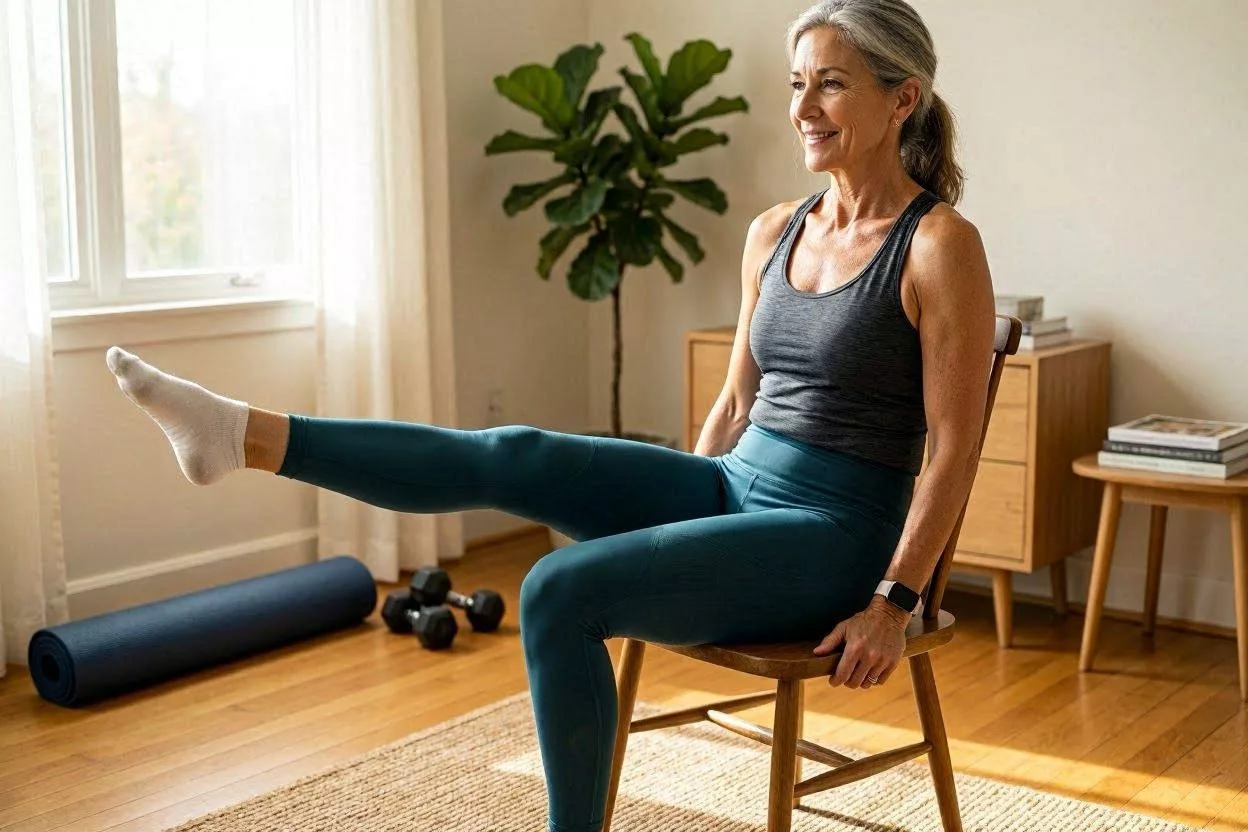
No. 9 – Seated Leg Raises
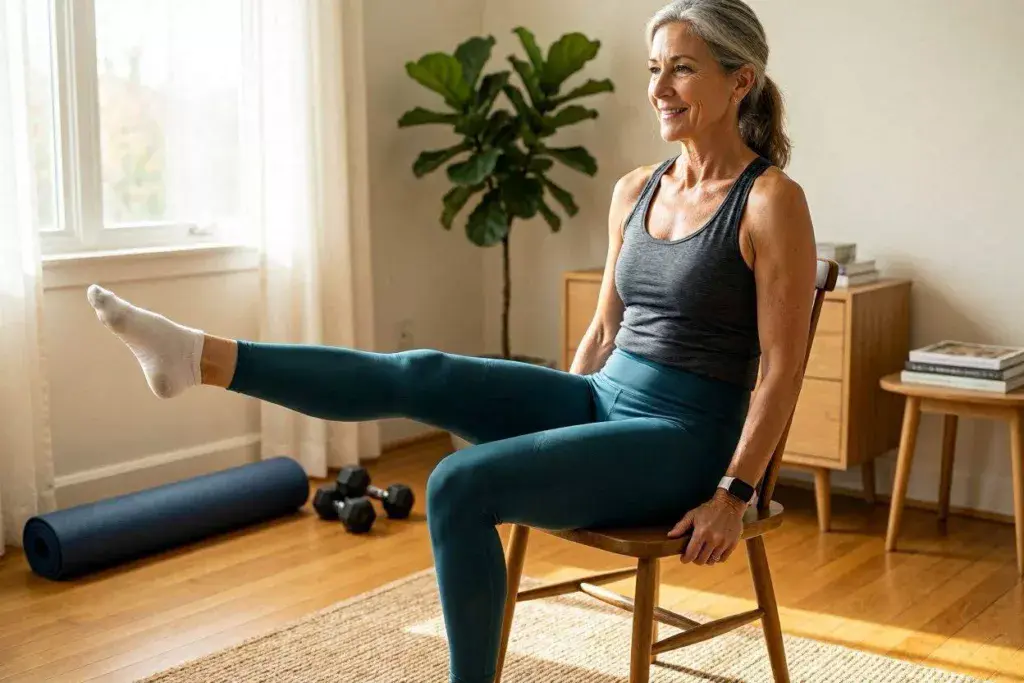
This is an excellent exercise for anyone with limited mobility or balance concerns.
Simply sit in a sturdy chair and slowly extend one leg until it is straight, hold for a few seconds, and then lower it again.
Benefits include:
- Strengthening the thighs and hips
- Improving circulation
- Supporting better walking ability
- Enhancing knee stability
This exercise can even be done while watching television.
No. 8 – Heel-to-Toe Walking
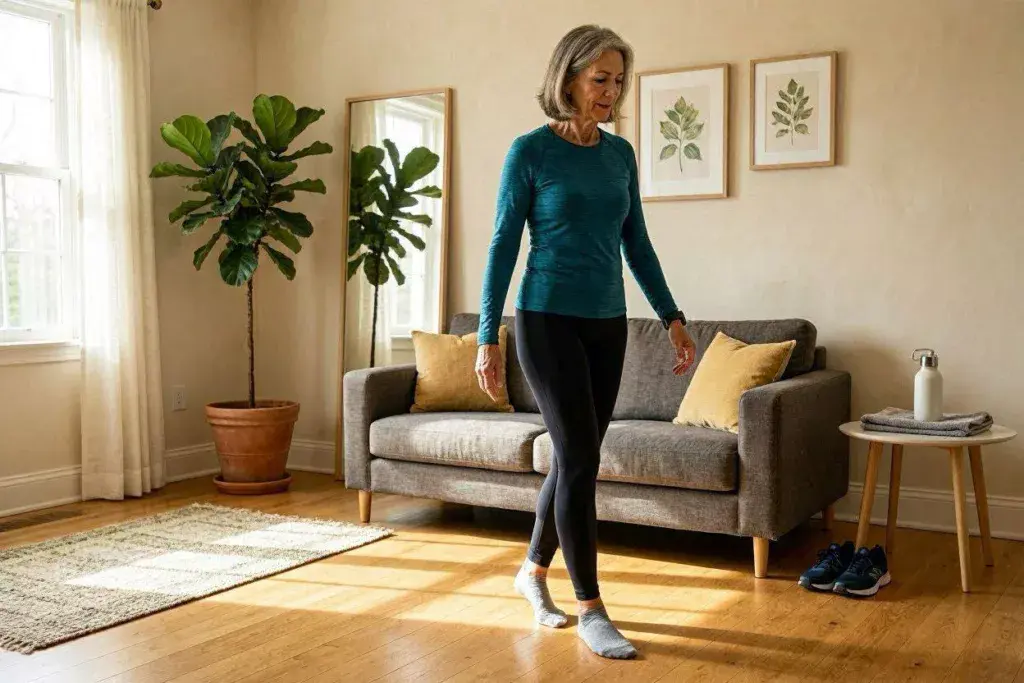
Balance becomes increasingly important as we age.
For this exercise, place the heel of one foot directly in front of the toes of the other foot as if walking on a straight line.
It may sound simple, but it can significantly improve:
- Balance
- Coordination
- Confidence while walking
- Fall prevention
Keep a countertop or sturdy chair nearby if you need support.
No. 7 – Wall Push-Ups
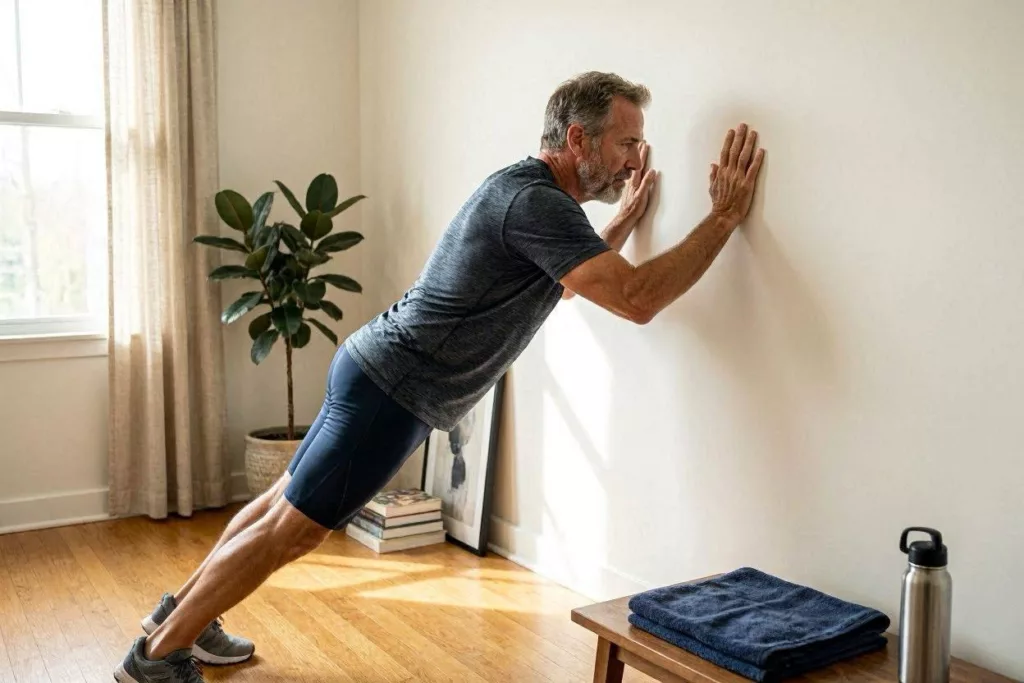
Traditional push-ups may be difficult for many seniors, but wall push-ups offer similar benefits in a much gentler way.
Stand facing a wall, place your hands on it, and slowly lower yourself toward the wall before pushing back.
This exercise helps strengthen:
- Chest muscles
- Arms and shoulders
- Upper body strength needed for daily tasks
Activities such as carrying groceries or getting up from a chair become easier with improved upper body strength.
No. 6 – Chair Squats
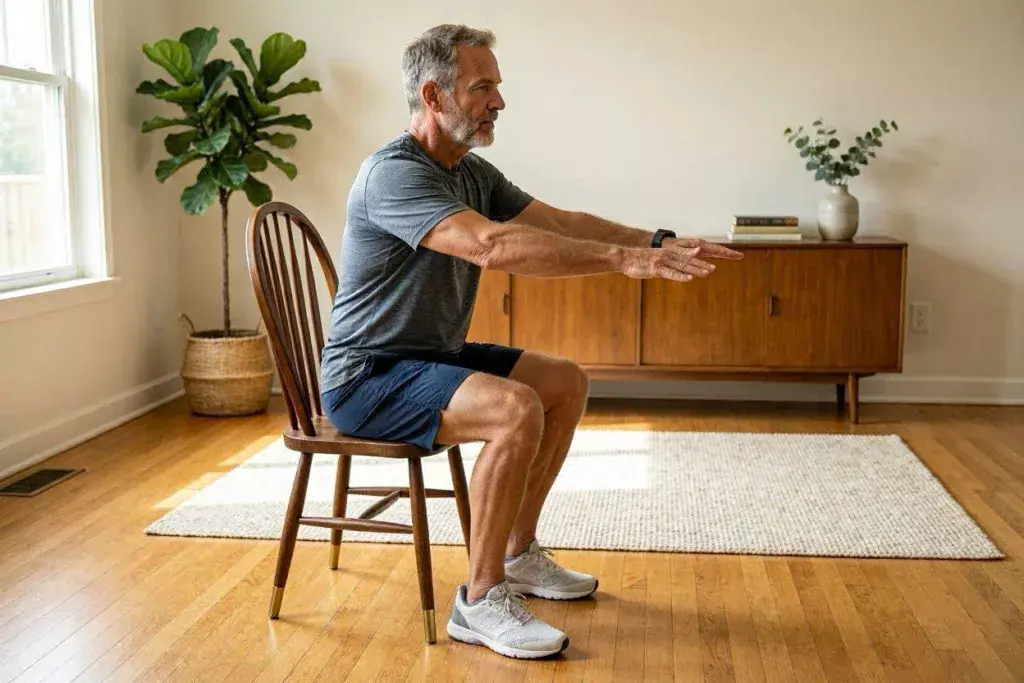
Getting up and sitting down may not seem like exercise, but it is actually one of the most functional movements we perform every day.
Using a sturdy chair, slowly sit down and stand back up without using your hands if possible.
Chair squats help improve:
- Leg strength
- Balance
- Independence
- Ability to climb stairs
Strong legs are one of the keys to remaining active and independent later in life.
No. 5 – Standing Side Leg Raises
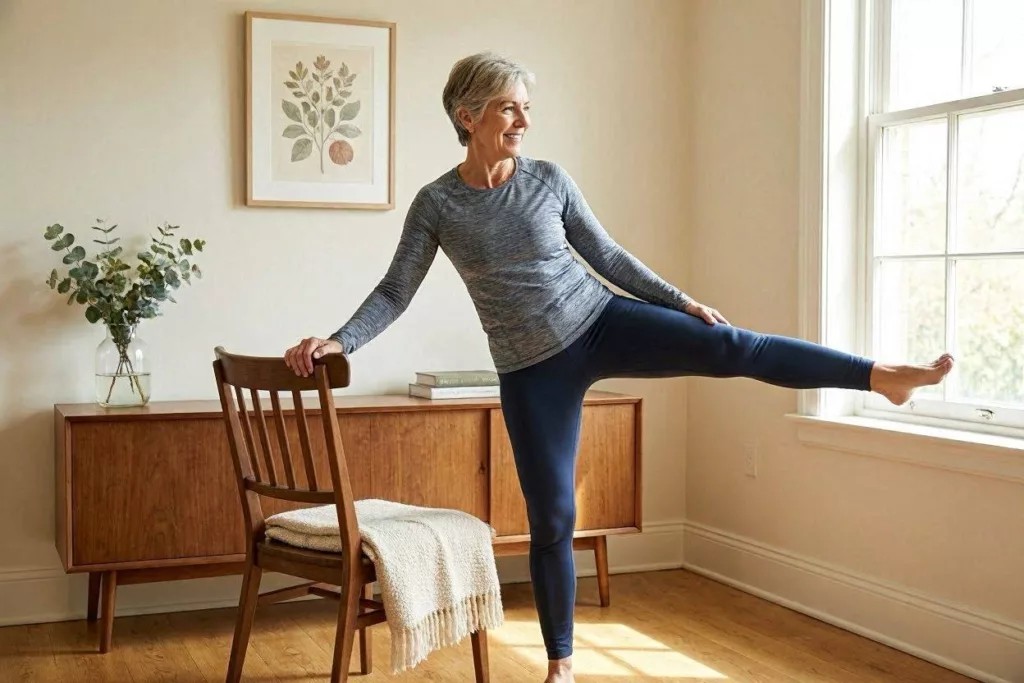
This exercise targets muscles that are essential for stability.
Hold onto the back of a chair and slowly raise one leg out to the side before lowering it again.
Benefits include:
- Strengthening hips
- Improving balance
- Supporting better posture
- Reducing fall risk
Strong hip muscles are often overlooked but play an enormous role in maintaining mobility.
No. 4 – Simple Stretching Routines
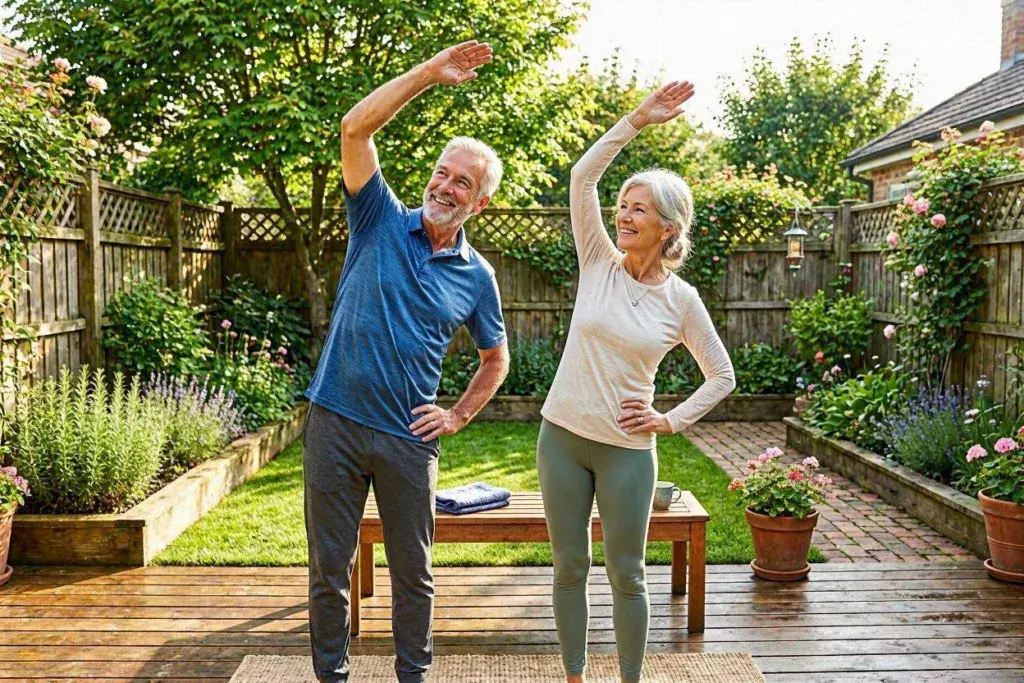
Flexibility tends to decline with age, making everyday movements more difficult.
A few minutes of stretching each day can make tasks such as bending, reaching, or getting out of bed much easier.
Gentle stretches can improve:
- Joint mobility
- Muscle flexibility
- Circulation
- Relaxation
Many seniors find that stretching first thing in the morning helps reduce stiffness throughout the day.
No. 3 – Resistance Band Exercises
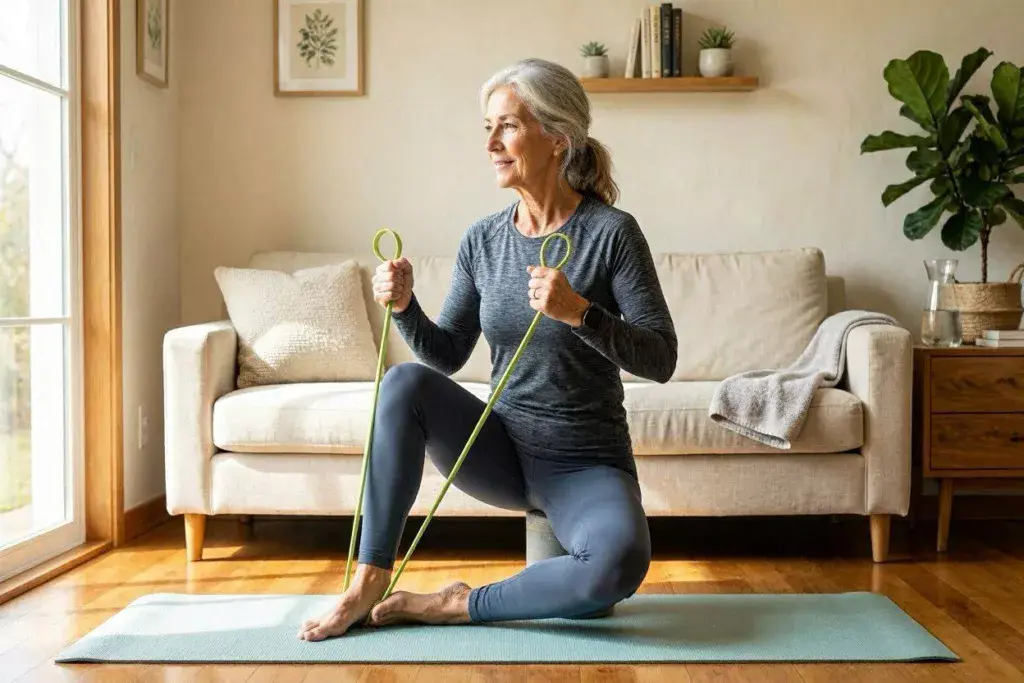
Resistance bands are inexpensive, lightweight, and extremely effective.
They provide gentle resistance that helps build muscle without placing excessive stress on the joints.
Resistance band exercises can:
- Increase muscle strength
- Support bone health
- Improve posture
- Make everyday activities easier
Best of all, resistance bands are easy to store and can be used almost anywhere.
No. 2 – Tai Chi
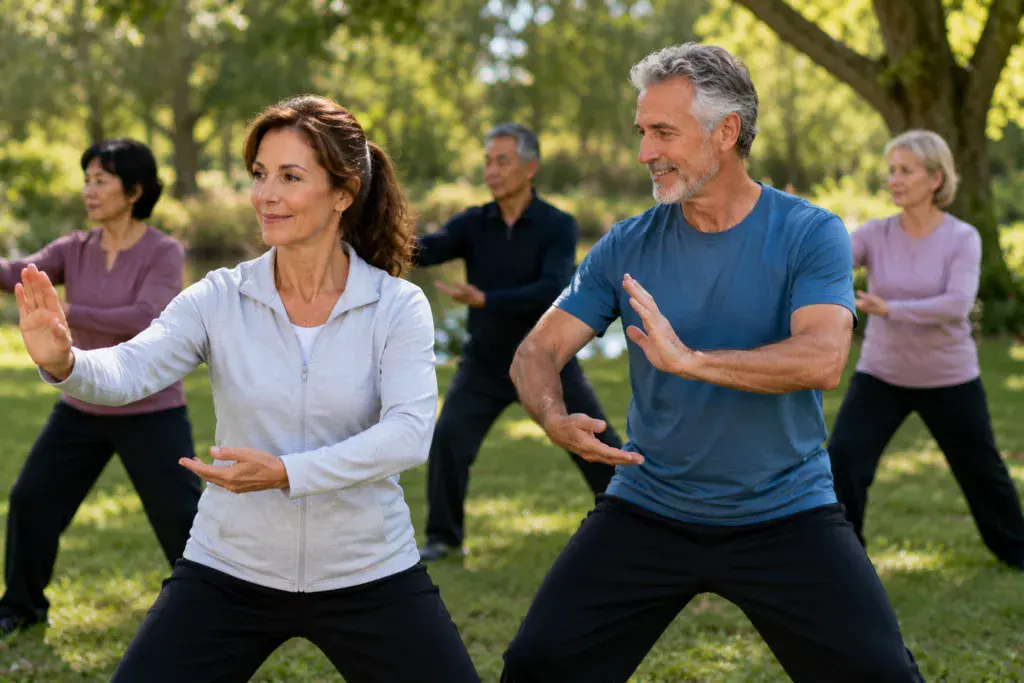
Often called “meditation in motion,” Tai Chi consists of slow, controlled movements combined with deep breathing.
Studies have shown that Tai Chi can be particularly beneficial for older adults because it improves:
- Balance
- Coordination
- Flexibility
- Mental focus
- Stress reduction
Many seniors find Tai Chi both calming and energizing at the same time.
It is also one of the best activities for reducing the risk of falls.
No. 1 – Walking
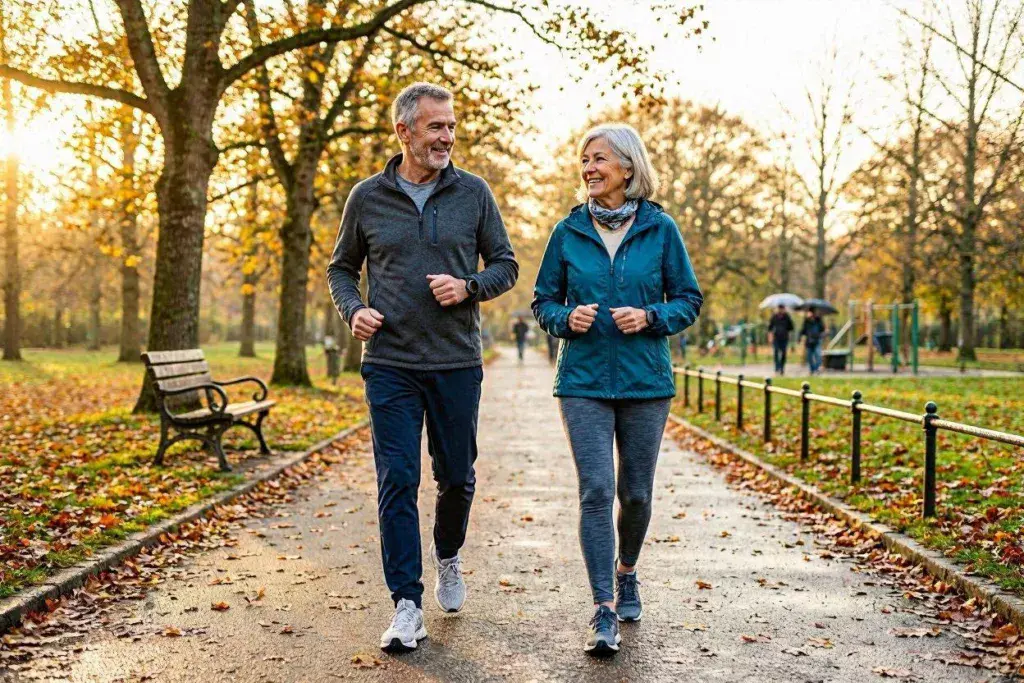
If there is one exercise that almost everyone can do, it is walking.
Walking remains one of the simplest, safest, and most effective forms of exercise available.
Regular walking can:
- Strengthen the heart
- Improve endurance
- Help maintain a healthy weight
- Boost mood and mental wellbeing
- Reduce the risk of many chronic diseases
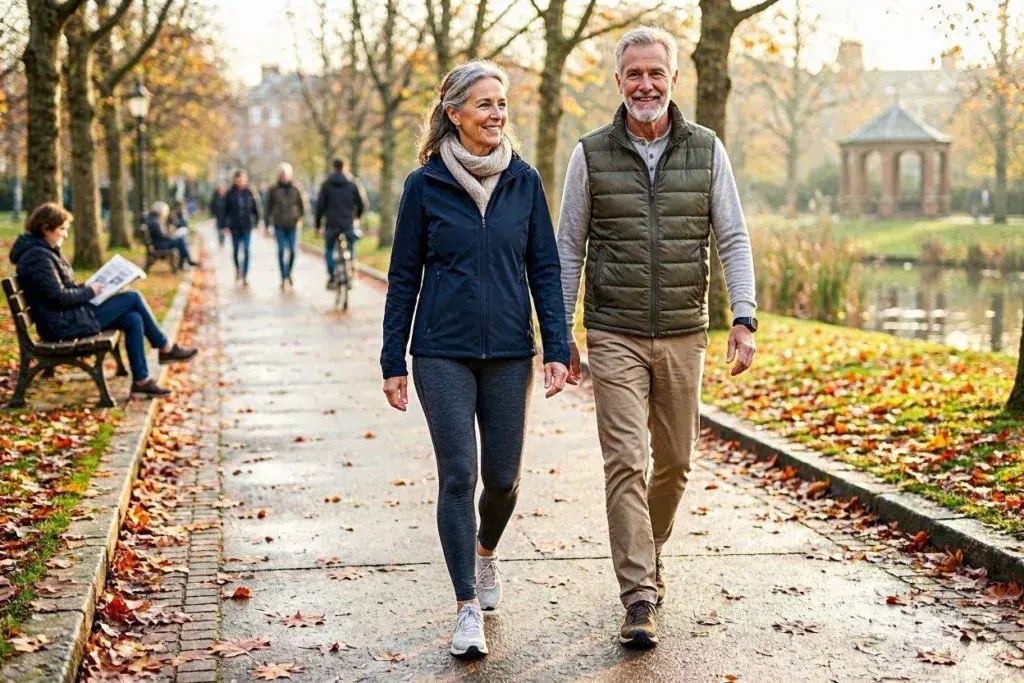
You don’t have to walk miles each day to benefit. Even a brisk 20 to 30-minute walk several times a week can make a remarkable difference.
Many seniors also enjoy turning walking into a social activity by inviting a friend, spouse, or neighbor along.
Making Exercise Part of Everyday Life
The biggest challenge for many people isn’t starting an exercise routine—it’s maintaining one.
Try these simple tips:
- Start slowly and build gradually.
- Choose activities you genuinely enjoy.
- Exercise with friends whenever possible.
- Keep track of your progress.
- Celebrate small victories.
Remember, every bit of movement counts.
And if this article inspires you to share your own experiences, start a blog, or build a website about staying fit or other interests, a resource like Wealthy Affiliate can be worth mentioning because it provides training, tools, and community support for people who want to learn how to create and grow an online presence.
Final Thoughts
Growing older certainly brings challenges, but becoming inactive doesn’t have to be one of them.
The truth is that regular low impact exercise can help you stay stronger, more mobile, and more independent for years to come.
Whether you begin with a few chair exercises, some gentle stretching, or a daily walk around the neighborhood, the important thing is simply to start.
After all, it is never too late to invest in your health.
Your future self will thank you for every step, stretch, and movement you make today.