
Most people who search for ways to boost retirement savings quickly find a long list of side gigs, many of which need more energy or time than you want to give. This article works in a different order. First you stop money from leaking out, then you turn things you already own or know into cash, and only after that do you build something slow, like a small blog with affiliate links.
Each step costs little to start and puts none of your existing savings at risk. The goal is a few hundred extra dollars a month, and a realistic first target is your first $100.
What “Quickly” Really Means When You Are Retired
A retiree has less room for mistakes than a younger person, and that changes what “quickly” should mean. A fast result that puts your nest egg at risk is a bad trade. A slower one that adds to your income while leaving your savings untouched is a good one.
The three levers in this article work at different speeds:
- Stopping leaks can save money within a week or two, because you only have to make a few phone calls and read a few statements.
- Selling what you own or know can bring in your first dollars within a few weeks, depending on how fast your items sell or how soon someone books your help.
- A hobby blog with affiliate links takes the longest. You can set it up in weeks, but income from a new site generally builds slowly, so treat it as a long-term project.
So “quickly” here means you can start within weeks. You will not see a windfall in that time, but you can build a steady habit of adding to your savings, and that habit is what lasts.
Start With the Leaks: Small Costs That Quietly Drain Your Savings
Every dollar you stop losing is a dollar you do not have to earn. Saved money also is not taxed the way earned income can be, which makes leaks the easiest place to begin.
Many retirees pay for things set up years ago and never looked at again. Sit down with your last two or three bank and card statements and a pen. Circle anything you do not recognize or have not used lately.

Common places to look:
- Subscriptions. Streaming services, magazines, apps, and software that renew automatically. Cancel what you have not used in the last month.
- Insurance. Home, auto, and supplemental policies often renew without anyone checking whether the price or the coverage still fits your life. Ask your current company what discounts you qualify for, and get one or two comparison quotes.
- Bank and account fees. Monthly maintenance fees and overdraft charges can sometimes be removed by changing account type or asking.
- Phone, internet, and cable plans. Call and ask if a cheaper plan covers what you actually use.
Some costs only show up once you are retired, such as rising medical expenses and home repairs. Our guide to hidden retirement expenses to plan for lists several worth knowing about, so you can budget for them instead of being surprised.
Write down the total you save each month. That number is your first win, and you can put it straight into savings.
Sell What You Already Own or Already Know
Once the leaks are closed, look at what you already have. Retired households often hold years of belongings and years of skill, and both can be turned into income with very little spending.
Things you own
Walk through your garage, attic, closets, and spare room with one question: have I used this in the last year? Good candidates include:
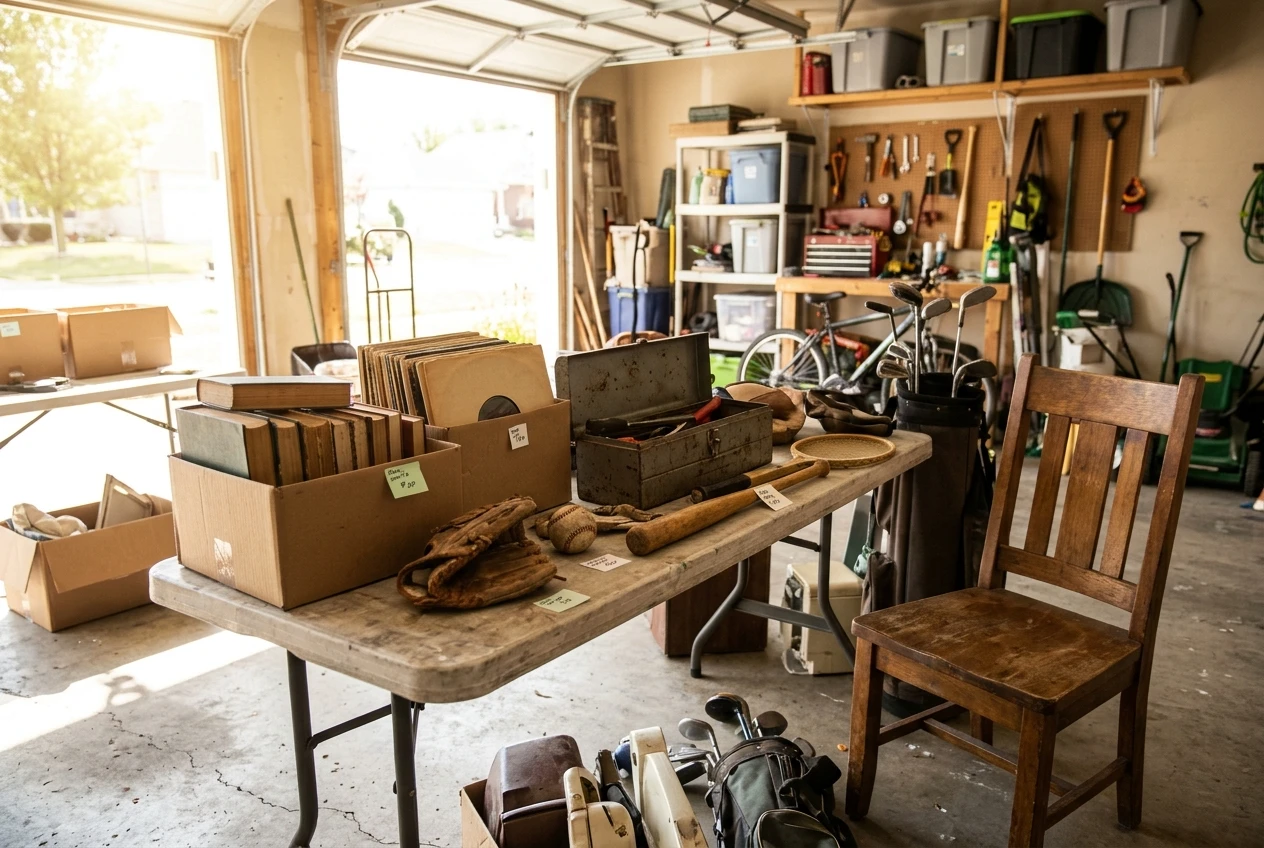
- Tools and equipment you no longer need
- Furniture, especially solid wood pieces
- Collectibles, books, and records
- Sporting goods, craft supplies, and electronics
- Clothing and household items in good condition
You can sell through a local yard sale, a consignment shop, or an online marketplace. Selling locally costs nothing but a little time. Online marketplaces may charge fees, so read the fee terms before you list anything.
Price items by checking what similar ones have actually sold for, not what sellers are asking. Start with a handful of items rather than trying to clear the whole house at once.
Things you know
Your experience is also worth something. A career, a trade, or a long-standing hobby gives you knowledge other people will pay to learn. A few examples:
- Tutoring a subject you know well
- Helping neighbors with sewing, woodworking, gardening, or home repair
- Teaching a skill to a small group
- Pet sitting or house sitting, if you enjoy it
Start by telling people you know. Word of mouth costs nothing, and your first customer is often a friend of a friend. Keep the hours small and the prices fair so the work stays enjoyable.
Turn a Hobby Into a Small Monthly Paycheck With a Simple Blog and Affiliate Links
If you already enjoy a hobby, you can write about it. A blog is a website where you share what you know, one article at a time. Affiliate links are special links to products or programs. When a reader buys through your link, the company pays you a commission, and the reader pays nothing extra.
This is the slowest of the three levers, but it has an advantage the others lack: an article you write once can keep helping readers, and earning you commissions, for a long time afterward.
Pick a topic you can keep writing about
Choose something you enjoy enough to write about weekly: gardening, woodworking, quilting, fishing, cooking, birdwatching, or travel on a budget. If you are unsure, our piece on trending hobbies for seniors may spark an idea. Your readers will most likely be people a little behind you on the same path, so explain things the way you wish someone had explained them to you.

Write helpful articles first
Begin with simple, useful pieces that answer a question a beginner would ask. “What to buy for your first vegetable bed” or “How to choose a first fishing rod” are the right size. Write in plain language and be honest about what works and what does not.
Add affiliate links where they genuinely help
Recommend only products you would be comfortable suggesting to a friend. Most affiliate programs are free to join, and each has its own rules about how and where you can place links. Read those rules. You should also tell readers plainly that you may earn a commission, and a short sentence near the link does that.
If you want a walkthrough of the basics, our pet blogging for beginners article shows how a hobby-based blog comes together, and the same approach applies to any subject.
Expect the first few months to bring little or no income. Keep your expectations modest and your posting steady.
Keep It Low-Risk: What to Avoid When You Need Your Savings to Last
Anyone promising fast money to retirees deserves suspicion. A few rules protect what you already have.
- Do not pay to get started on anything that promises income. A blog needs a domain name and hosting at most, and many people begin with very little. Be wary of “opportunities” that ask for large upfront fees.
- Do not withdraw savings to fund a side project. The point is to add to your savings, not shrink them while you wait.
- Avoid get-rich-quick schemes, including anything that guarantees returns. Real income from a blog or from selling things comes from steady work.
- Do not buy inventory in bulk. If you sell things, sell what you already own.
- Keep personal information private. Never share bank details, Social Security numbers, or passwords with a buyer, a “client,” or a program you have not verified.
Extra income may also be taxable, and it can affect other parts of your finances. A tax professional can tell you how your side income should be reported, and a short conversation now is easier than sorting it out later.
Decide Where Each Extra Dollar Goes, Including Paying Down Debt
Extra money disappears easily when it has no assignment. Decide in advance where each dollar will go. Here is one simple way to split it, using made-up numbers as an example.
Say your first $100 arrives. You might send $50 toward debt, $30 into savings, and keep $20 for something you enjoy. The percentages can differ for you, but the habit of deciding ahead of time is the part that matters.
Here is a reasonable order to consider:
- A small cash cushion. Having a bit of money set aside for surprises keeps you from dipping into long-term savings.
- High-interest debt. Paying down credit card balances usually saves more than most savings accounts earn, since the interest rate on the debt is typically higher. Our article on how to handle debt in a bad economy goes through the options.
- Long-term savings. Whatever remains goes into the accounts you rely on for retirement.
- A little for enjoyment. Keeping a small share for yourself makes it easier to stay with the plan.
Because your situation is specific to you, it is worth talking with a financial professional about how debt, savings, and withdrawals fit together.
Your First 30 Days: One Small Step per Week
A month is long enough to make a real start. Try one small step each week and nothing more.

Week 1: Find the leaks. Review your last few statements, circle unfamiliar charges, and cancel one subscription or call one company about your rate.
Week 2: Sell three things. Pick three items you no longer use. List them, or set them aside for a local sale. If you would rather share a skill, tell three people what you can help with.
Week 3: Choose your hobby topic. Write down ten questions a beginner might ask about it. Those questions are your first ten article ideas.
Week 4: Write one article. Answer one of those questions in plain words, the way you would explain it to a neighbor over coffee. Do not worry about affiliate links yet. Your first goal is to publish something helpful.
At the end of the month, add up what you saved and what you earned. Even a small number shows that the habit works, and that is the point of the first $100.
Try One Idea for 30 Days
Pick just one idea from this article and try it for 30 days, no pressure. You do not need to do all three levers at once, and a single steady habit is worth more than three abandoned ones. When you are ready for more options, read our guide to ways to generate retirement income.