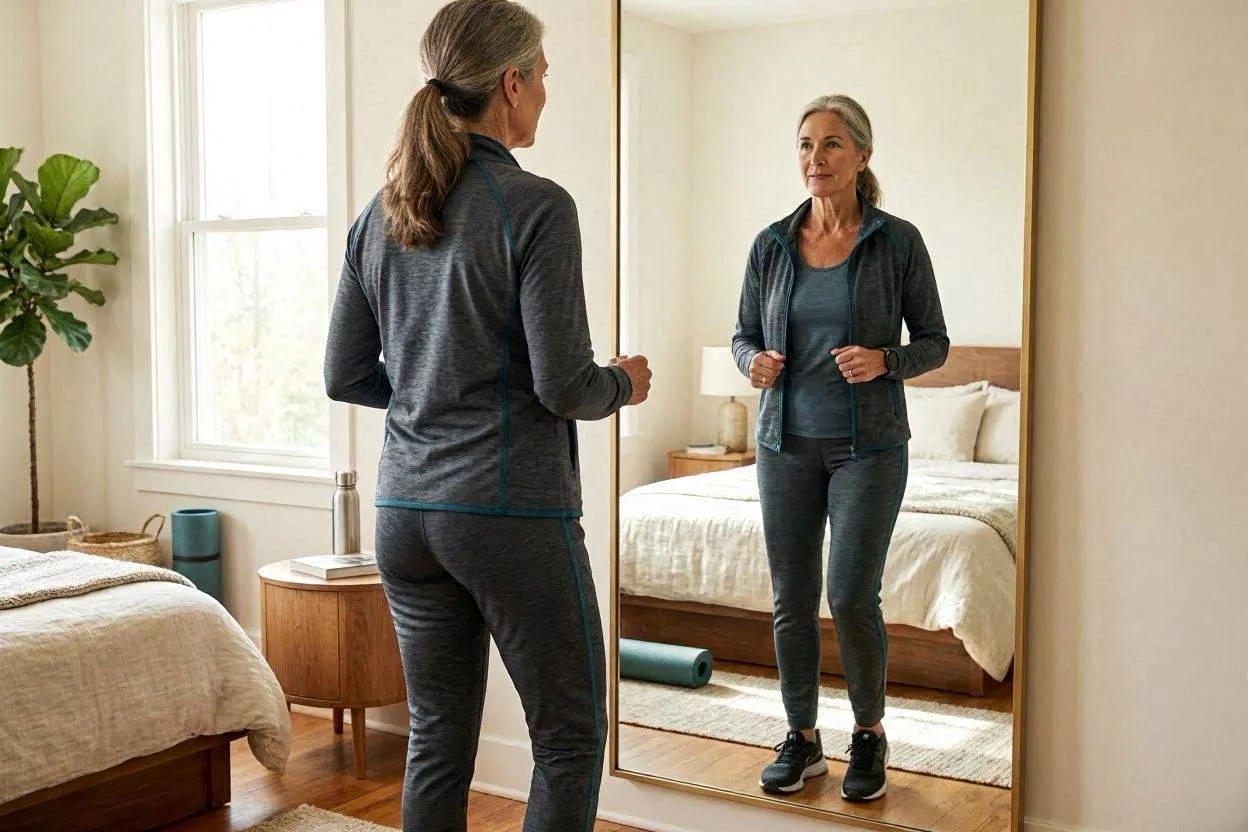
Aerobic exercises for seniors at home requires sustained elevated heart rates over a significant period of time, and it is also a great booster of mood and energy, allowing older people to maintain an active lifestyle.
Maintaining physical activity is essential to a person’s health as they age; aerobic exercises can help improve balance and actually strengthen bones. It vastly improves the quality of sleep and does wonders for endurance.
Working out at home has its perks, especially when the weather’s not so inviting or if getting to a gym is tricky. You’re in a comfy space, there’s no commute, and you can set your own pace. Plus, it can be safer, particularly now, since you can avoid crowded places.
Before jumping right into exercise, there are a few things to watch for. Make sure the area is clear of stuff you might trip over. Wear shoes that feel good and offer support. And it’s smart to do a quick warm-up to prep your muscles before you get going. Listen to your body and stop if something doesn’t feel right. Health comes first, always.
Simple Aerobic Exercises Seniors Can Do Without Equipment
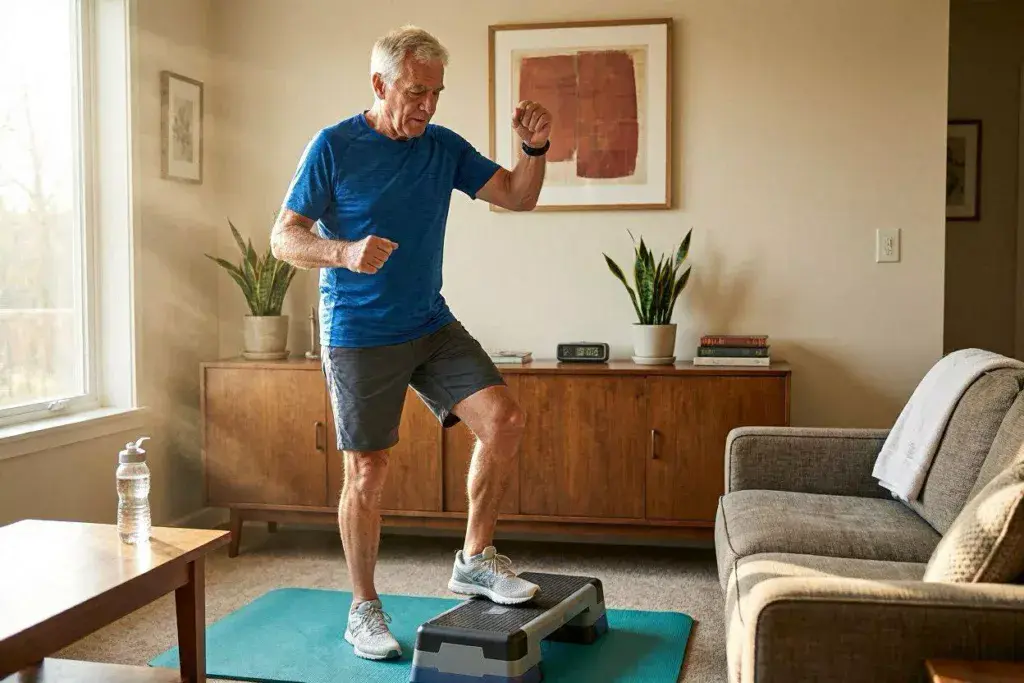
Working out without fancy equipment? Totally doable! There’s a bunch of aerobic exercises that are gentle on the joints but still pack a punch for fitness.
Low-impact exercises offer a great workout while minimizing strain, which is crucial as our bodies age and need a bit more care. Things like ‘marching in place’ can boost your heart rate with thighs lifted just above the knees. It’s a great way to warm up your body and get the blood flowing.
Shoulder rolls are another winner! They’re easy and help release tension—just lift your shoulders towards your ears, roll them back and down, then repeat. They keep those shoulder blades well-oiled and ready for action.
Side steps add a little rhythm to your routine while keeping that gentle impact. Just step side to side and feel free to throw in some arm movements for that extra calorie burn.
Arm circles—this is where you channel your inner windmill. Stretch your arms out and make small circles forward, then backward. It strengthens those arms without needing any handheld weights.
Standing leg lifts work wonders for leg strength and balance. Hold onto a sturdy chair if you like, for stability, and lift one leg at a time. It’s simple, but it does wonders for your legs and core.
Routines Involving Everyday Household Items
Sometimes everyday items around the house can double up as workout gear, turning standard aerobic routines into a little strength-building session. What’s more convenient than grabbing something already in your living space?
Using a chair isn’t just for sitting. It becomes a fantastic tool for seated aerobics. You can do leg lifts while sitting down to target your leg muscles without straining your back. Sitting tall and lifting each leg a few times works wonders for strength and balance.
Canned goods aren’t just for the pantry. They make awesome hand weights. Hold onto a couple of cans during your arm exercises. It not only adds a bit of weight to keep your muscles engaged but also fits right in with household resources.
A towel isn’t just for drying off—turn it into a stretching buddy. Grabbing each end of the towel in your hands and pulling gently can help stretch out your arms and shoulders, great for improving flexibility. It helps with those hard-to-reach spots, ensuring you stay limber and loose.
With just a few household items, you can boost your routine’s variety and effectiveness. It’s all about creativity and making the most of what you’ve got around the house. Start with light items and up the challenge as you get used to the moves, keeping safety at the forefront.
Creating a Personalized Aerobic Exercise Plan
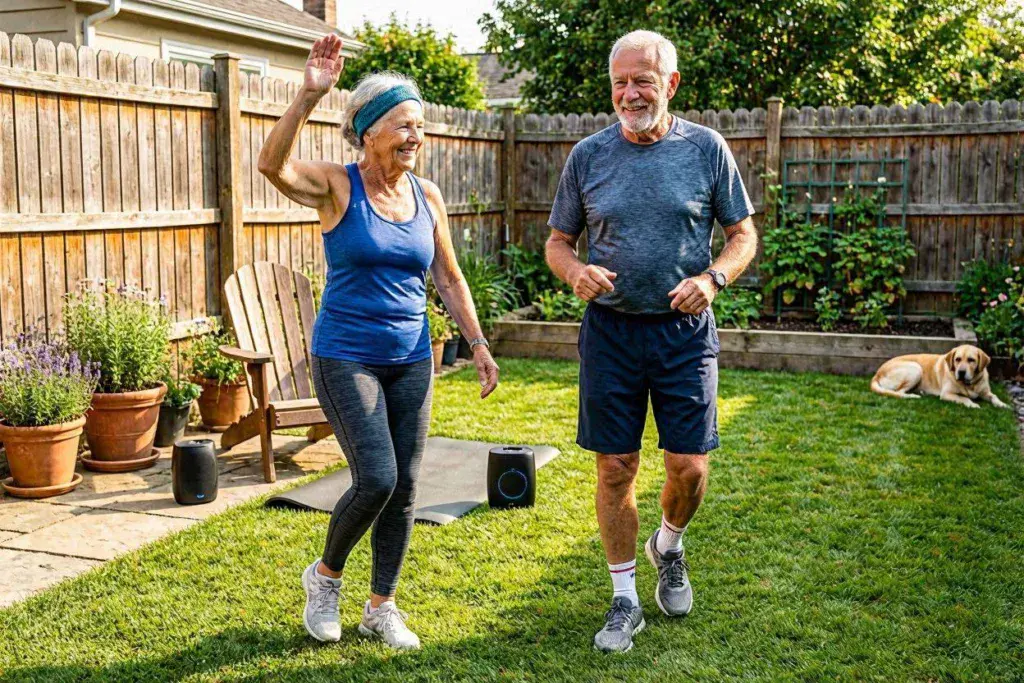
Customizing an exercise plan is like picking out your favorite ice cream flavor—it should match your taste and needs. You want something that fits your current fitness level and that you actually enjoy doing. No point in setting up a routine that feels like a chore!
Set realistic goals for yourself. Aim for small, achievable milestones that will keep you motivated. Celebrate hitting those marks—it will help you a lot in pushing yourself to reach the next step.
Track your progress, write down your exercises and how long you spend on each. Seeing the growth over time can really boost your spirits. It’s not just about keeping count, but about feeling good when you see how far you’ve come.
Motivation is often a tricky one. Keeping a routine fresh can help with this. Swap out exercises or change the order around from time to time. This keeps things interesting and your muscles guessing, which is always good for progress.
Remember, you’re older now, so pay attention to how your body reacts to new exercises, and you might want to check out a 67 And Up article (getting fit after 60), before you begin. Work in some rest days to let your body recover. Recovery is just as crucial as the workouts themselves. It helps prevent injury and ensures you’re rebuilding stronger and more ready for the next session.
Recommended Weekly Activity
According to the CDC, adults aged 65 and older should aim for:
- 150 minutes of moderate aerobic activity per week
-
- (30 minutes per day, five days each week)
- Muscle-strengthening activities on at least two days per week
- Balance exercises several times each week
Final Thought
The “best” aerobic exercise is ultimately the one you enjoy enough to do consistently. Even 20 to 30 minutes of moderate activity most days of the week can significantly improve heart health, mobility, energy levels, and quality of life. Before beginning a new exercise program, especially if you have chronic health conditions or have been inactive for some time, consult your healthcare provider to ensure the activities you choose are appropriate for your individual health and fitness level.